
Maharashtra Budget 2023–24: Growth, Reforms and $1 Trillion Vision
Maharashtra has set its sights on becoming India’s first trillion-dollar economy, and the first budget presented by the Eknath Shinde-led government lays out a clear, people-centric roadmap. With a projected growth rate of 6.8% for FY 2022-23, and strong performance across agriculture, industry, and services, this budget is designed to meet the aspirations of women, middle-class families, and farmers alike. For anyone searching for Maharashtra’s fiscal policy details, budget highlights, and sector-wise expenditure plans, this article breaks down everything you need to know — structured, factual, and easy to read.
Economic Growth Outlook
According to the state’s Economic Survey, Maharashtra’s economy is expected to expand by 6.8% in FY 2022-23.
- Agriculture & allied sector: +10.2% growth driven by good monsoons and irrigation projects
- Industry: +6.1% growth, led by manufacturing and infrastructure push
- Services sector: +6.4% growth, powered by IT, trade, and logistics
This balanced growth mix ensures resilience and positions Maharashtra as the engine of India’s GDP, contributing close to 20% of national output.
People-Centric Budget Priorities
The first budget of the Shinde-Fadnavis administration focuses on inclusive development:
- Schemes for women entrepreneurs and self-help groups
- Tax incentives for the middle class to boost disposable income
- Infrastructure projects that connect rural areas with industrial hubs
- Expanded irrigation coverage for drought-prone Vidarbha and Marathwada
“जनहिताय सदा” — welfare for all, always — is not just a slogan but a fiscal principle reflected in allocations.
Major Budget Highlights
| Category | Allocation / Growth Focus |
| Agriculture | ₹7,000+ crore for irrigation projects, crop insurance support |
| Industry | Boost to MSMEs, incentives for electric vehicle manufacturing |
| Education | Free uniforms and scholarships up to Class VIII |
| Health | Expansion of Aapla Dawakhana clinics, ₹5 lakh health coverage |
| Infrastructure | 5,000 km of new access-controlled highways |
| Social Welfare | Increased pensions under Sanjay Gandhi Niradhar Yojana |
These highlights show a balanced focus on growth and welfare — strengthening Maharashtra’s position as India’s most industrialized state.
Detailed Budget Publications
To maintain transparency, the government has released multiple documents:
- Budget Speech Parts I & II – CM’s vision and fiscal roadmap
- Green Book – Detailed estimates of revenue and receipts
- Pink Book – Major head-wise and department-wise expenditure summary
- Yellow Book – Medium Term Fiscal Policy and Disclosures
- District-wise Expenditure Data – Breakup for Vidarbha, Marathwada, and Rest of Maharashtra
This layered approach helps researchers, journalists, and citizens track funds from allocation to implementation.
Focus on Regional Equity
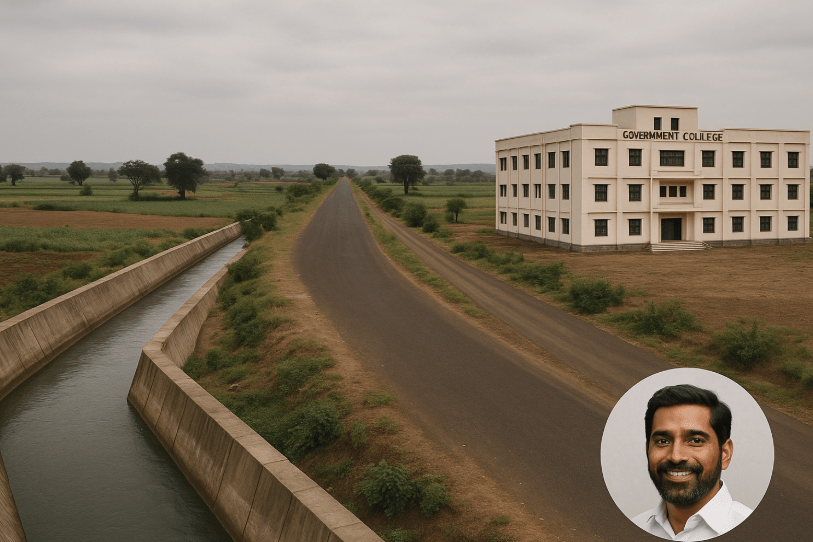
The budget dedicates significant funds for Vidarbha and Marathwada — historically underserved regions. Investments include irrigation canals, rural roads, and new government colleges. These moves are expected to curb migration to urban centers and create local job opportunities.
Industry and Infrastructure Push
A major emphasis is placed on boosting industry and logistics:
- Construction of the Mumbai Trans-Harbor Link (Atal Setu)
- Fast-tracking Samruddhi Mahamarg completion
- Investment promotion policies attracting FDI and domestic capital
- Support for textile parks and food processing clusters
By reducing bottlenecks in transport and power supply, Maharashtra aims to make manufacturing globally competitive.
Fiscal Responsibility and Long-Term Vision
Despite the ambitious spending, the state government is committed to fiscal discipline. The Medium Term Fiscal Policy Statement outlines plans to maintain deficit targets while funding growth programs. This balance is crucial to achieving the $1 trillion economy target by 2027.
Why This Budget Matters
This budget is more than a set of numbers — it is Maharashtra’s blueprint for the next decade:
- Meeting SDG targets on health, education, and infrastructure
- Preparing the workforce for Industry 4.0 with skilling programs
- Attracting technology-driven investments in EVs, fintech, and green energy
For students, entrepreneurs, and policy analysts, this is a unique opportunity to watch how fiscal policy transforms into real-world development.
Women-Centric Initiatives
One of the strongest features of this budget is its emphasis on women’s empowerment. The state has expanded schemes like Lek Ladki, which provides financial assistance up to ₹1 lakh for a girl child from families with yellow and orange ration cards.
Additionally:
- 50% fare discount on ST buses encourages women to travel for education and employment.
- Skill training centers have been proposed in every district to prepare women for self-employment.
- Microfinance support for women-led startups through cooperative banks is expected to generate thousands of new enterprises.
“महिला सशक्तिकरण ही महाराष्ट्राच्या विकासाची किल्ली आहे.”
(“Women’s empowerment is the key to Maharashtra’s progress.”)ighe wife, but his influence on Shinde’s leadership style is well-documented and widely respected, especially in Thane and surrounding districts.
Education and Youth Development
The budget significantly increases scholarships for students from disadvantaged backgrounds. Free uniforms, shoes, and socks for students up to Class VIII are now included in the state’s education program.
Key highlights:
- PM SHRI Schools are being set up as model institutions offering high-quality, inclusive education.
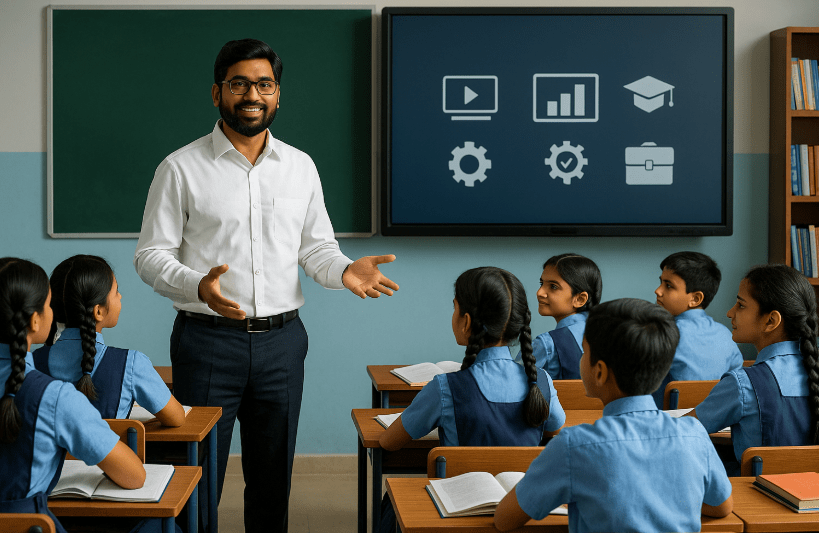
- Funding for digital classrooms and teacher training programs has been expanded.
- Special focus on skill development in emerging sectors like EV manufacturing, AI, and robotics.
This ensures that Maharashtra’s youth are prepared for the industries of the future.
Health and Social Security
Healthcare has been given a major push. The Mahatma Jyotirao Phule Jan Arogya Yojana and Ayushman Bharat schemes have been integrated to offer seamless coverage of up to ₹5 lakh per family per year.
Further steps include:
- Launch of 700 Aapla Dawakhana clinics across the state for affordable primary care.
- Expansion of dialysis units in rural hospitals.
- ₹82 crore assistance disbursed through the Chief Minister’s Medical Aid Cell last year.
These measures reduce out-of-pocket expenses and improve access to healthcare for rural families.
Employment Generation and MSME Support
To address unemployment, the state has expedited recruitment for 75,000 government posts and introduced single-window clearance for MSMEs.
Other measures:
- Loans for 12,000+ entrepreneurs under the Chief Minister’s Employment Generation Program.
- New policies for unorganized workers, including accident insurance and pension support.
- Incentives for companies hiring from rural skill centers.
This approach builds a direct bridge between education, training, and job creation.
Regional Investment Plans
The budget provides separate allocations for Vidarbha, Marathwada, and Rest of Maharashtra to ensure balanced development.
| Region | Key Projects |
| Vidarbha | New irrigation canals, cotton processing units |
| Marathwada | Drought-proofing works, rural roads, drinking water projects |
| Rest of Maharashtra | New government colleges, industrial parks |
This region-specific spending helps reduce disparities and supports the state’s goal of inclusive growth.
Green Growth and Sustainability
Recognizing climate challenges, the budget supports renewable energy and environmental projects:
- Mukhyamantri Saur Krushi Vahini 2.0 to provide daytime solar power to farmers.
- Incentives for industries that adopt waste-to-energy and water recycling projects.
- Large-scale tree plantation drives along highways and degraded forest areas.
These steps combine economic progress with environmental responsibility.
Why This Budget Is Different
Unlike previous budgets that focused mostly on urban infrastructure, this one spreads resources across agriculture, health, education, women’s empowerment, and regional equity. It is a mix of hard infrastructure spending (roads, bridges) and soft infrastructure (skills, social security).
For citizens, this means that whether you are a farmer in Vidarbha, a student in Pune, or a startup founder in Mumbai, you will see a tangible impact of this fiscal plan.