
Eknath Shinde Governance Paradigm: Building a $1 Trillion Maharashtra
Eknath Shinde has reshaped Maharashtra’s political and governance model with a focus on decisive action and public-oriented reforms. As Chief Minister, he has made janahitaya sarvada — welfare for all, always — the guiding principle of his administration. For readers searching for eknath shinde political career, eknath shinde governance model, and eknath shinde today vision, this article explores his journey from Thane Municipal Corporation leader to the architect of Maharashtra’s $1 trillion economy roadmap.
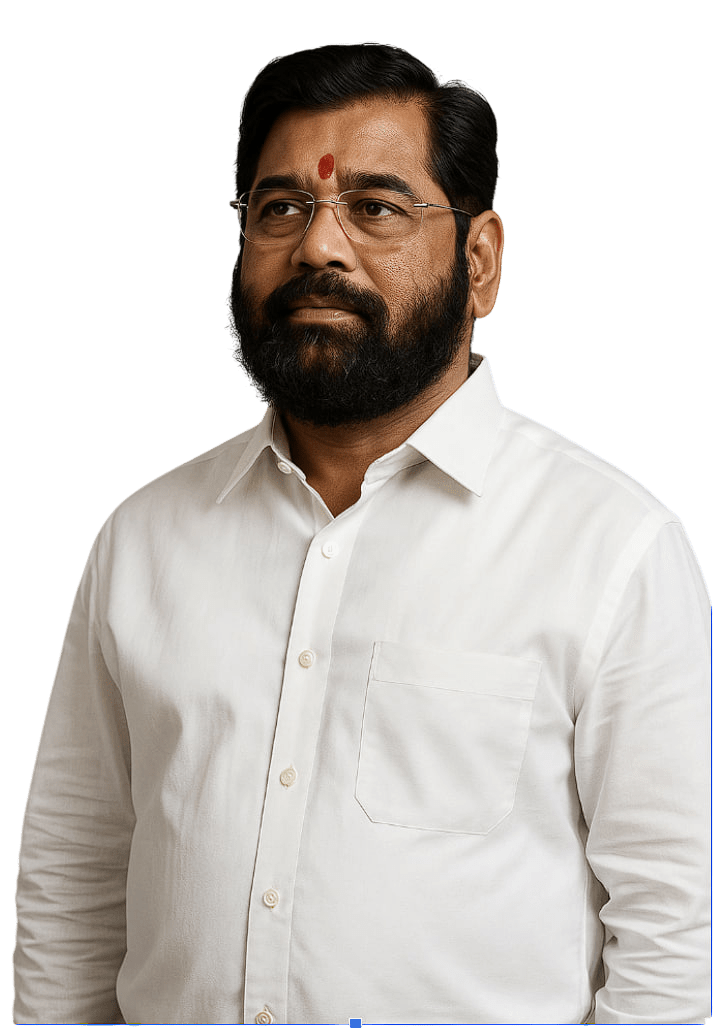
From Thane Leadership to Statewide Impact
Before taking the state’s top job, Eknath Shinde proved himself in local governance. As Leader of the House in the Thane Municipal Corporation, he solved civic issues ranging from water distribution to public transport. This grassroots experience gave him an acute sense of what ordinary citizens expect from the government — quick, transparent action.
His subsequent years as a senior minister further honed his ability to deliver projects efficiently. Colleagues often cite his habit of personally inspecting project sites as a reason for faster completion rates.
Philosophy of Janahitaya Sarvada
The central idea of Shinde’s governance is जनहिताय सदा (janahitaya sarvada) — “for the welfare of all, always.” This means policies are designed to include marginalized groups in development, strengthen industrial growth, and improve public services.

Instead of reactive measures, Shinde’s administration emphasizes proactive governance: identifying bottlenecks before they cause crises, especially in sectors like transport, housing, and urban development.
Economic Vision – Targeting $1 Trillion by 2027
One of Shinde’s most ambitious goals is to make Maharashtra a $1 trillion economy by 2027 and a $3.5 trillion economy by 2047. This vision aligns with India’s national growth trajectory and cements Maharashtra’s role as the country’s most industrialized state, contributing around 20% to India’s GDP.
Key strategies include:
- Expanding industrial corridors and logistics hubs
- Strengthening MSMEs and start-ups with credit and digital infrastructure
- Upgrading ports, highways, and public transport to reduce logistics costs
Attracting FDI and domestic investment through policy reforms
MITRA – Maharashtra’s Transformation Think Tank
To achieve this vision, the state created MITRA — the Maharashtra Institution for Transformation. Chaired by Eknath Shinde and co-chaired by Deputy CM Devendra Fadnavis, MITRA functions as the state’s policy brain trust.
MITRA’s Core Responsibilities
| Area | Role of MITRA |
| Data Analysis | Collect and study state-wide data for evidence-based decisions |
| Policy Design | Frame sector-specific strategies for industry, health, education |
| Monitoring | Track project implementation and remove roadblocks |
| Long-Term Vision | Prepare blueprints for $1 trillion and $3.5 trillion economy milestones |
This data-driven approach brings governance closer to a corporate-style performance model, ensuring measurable outcomes.
Social Inclusion and Welfare Programs
Eknath Shinde’s governance gives equal weight to social sectors:
- Affordable housing projects for the urban poor
- Schemes to improve public transport and road connectivity
- Inclusion of farmers in decision-making through digital grievance redressal
- Health insurance expansion under state and central schemes
These steps aim to “increase the power of the poor” and ensure that development reaches rural and urban Maharashtra equally.
Leadership Style and Public Engagement
Shinde is known for being accessible. Weekly janata durbars (public meetings) allow citizens to raise issues directly. His use of technology — dashboards and real-time monitoring — ensures accountability.
“सरकार का काम है लोगों के जीवन को आसान बनाना।”
(“The job of the government is to make people’s lives easier.”)
This blend of personal touch and digital governance reflects a modern approach to leadership.
Cooperative Federalism in Action
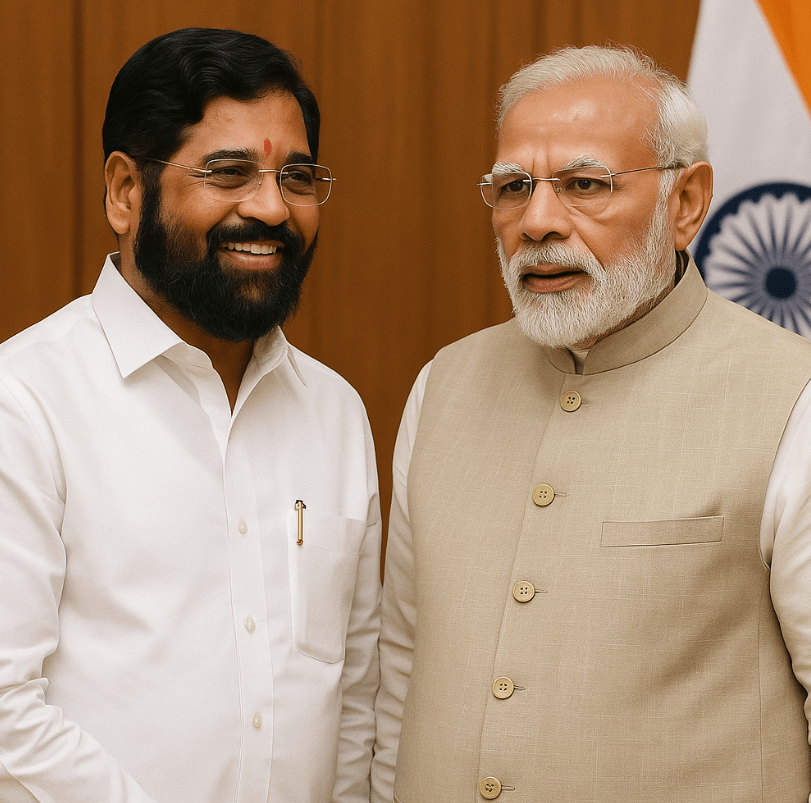
Shinde works closely with the central government under PM Narendra Modi, aligning state policies with national missions such as Make in India, GatiShakti, and PM Gati Shakti infrastructure push. This cooperative federalism model accelerates funding approvals and boosts investor confidence.
Case Study – Thane Metro Project
A practical example of this governance style is the Thane Metro project. Initially delayed, the project gained momentum after Shinde’s intervention, with faster land acquisition and tender clearances. This approach demonstrates how local insight combined with state-level authority speeds up execution.
Industrial Growth and GDP Contribution
Maharashtra’s economy remains the engine of India’s growth. Under Shinde, the focus is on:
- Enhancing manufacturing output
- Creating skill development clusters near industrial zones
- Increasing the state’s share of national exports
If achieved, these steps will maintain Maharashtra’s position as India’s largest contributor to GDP, solidifying its role as an economic powerhouse.
Challenges and Road Ahead
Despite progress, challenges remain: urban congestion, equitable water distribution, and balancing environmental concerns with industrialization. The Shinde administration’s ability to manage these trade-offs will determine whether the $1 trillion economy target is achieved on time.