
Eknath Shinde Biography: From Satara to Chief Minister and Beyond
If you want the full story—eknath shinde biography, eknath shinde education qualification, his family history, previous offices, and how he reached the top—you’ve come to the right place. I’m Rohan Dipak Patil, and this independent archive compiles verified facts (including eknath shinde hd photo, eknath shinde birth place, eknath shinde full photo) so you don’t need to piece them together from unreliable sources.
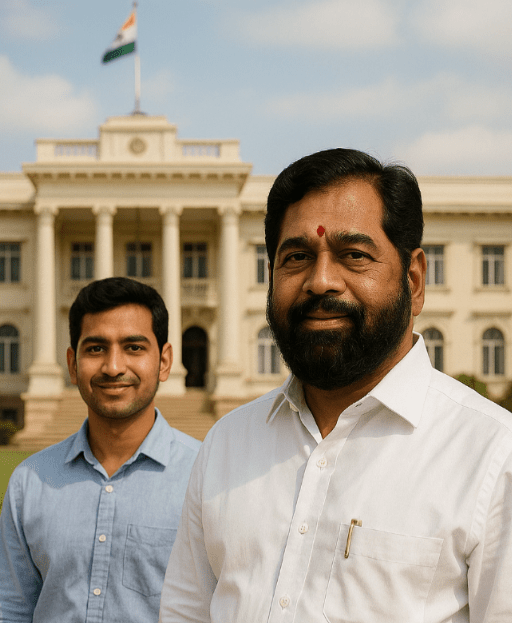
Early Life and Native Place
- Born on 9 February 1964 in Satara district, Maharashtra.
- As a child, his family moved from Satara to Thane, where his roots in politics would later deepen.
- “Native place” often refers to where one is born and raised; for him, that is Satara.
- His school education was at Mangala High School, Thane until Class 11, after which he left to support his family.
These early years shaped his understanding of youth, community, and grassroots challenges. From humble beginnings, he developed resilience and empathy—traits central to his later political journey.
Anand Dighe Mentorship & Political Career Start
In the 1980s, Dharmveer Anand Dighe became a mentor to the young Shinde. Under Dighe’s guidance, Shinde embraced ideology and civic activism through Shiv Sena. He served as Shakha Pramukh in Thane beginning in 1984, a role that confirmed his organizational and leadership skills.
Legislative Offices & Past Roles
Shinde’s political offices have spanned many roles, reflecting a deep public service record. Key positions include:
| Period | Office / Role |
| 1997 & 2002 | Elected corporator, Thane Municipal Corporation |
| November 2014 – December 2014 | Leader of Opposition in Maharashtra Legislative Assembly |
| 2004–2019 | Four consecutive terms as MLA, Kopri-Panchpakhadi constituency, Thane |
| Prior to 2022 | Held portfolios including Public Works, Urban Development, and Information Technology |
| From 30 June 2022 | Serving as Chief Minister of Maharashtra |
These previous offices show a clear trajectory: local governance → legislative assembly → chief ministership. The consistency shows eknath shinde political career built steadily over decades.
Education, Qualifications & Family
- He earned a Bachelor of Arts degree in 2020 from Yashwantrao Chavan Maharashtra Open University, with 77.25%.
- His early schooling was at Mangala High School, Thane.
Family history:
- Married to Mrs. Lata Shinde.
- Their son, Dr. Shrikant Shinde, is a Member of Parliament (Lok Sabha) representing the Kalyan constituency.
These details verify eknath shinde family, eknath shinde biodata, and eknath shinde education qualification. They help us to see both the human background and public persona.
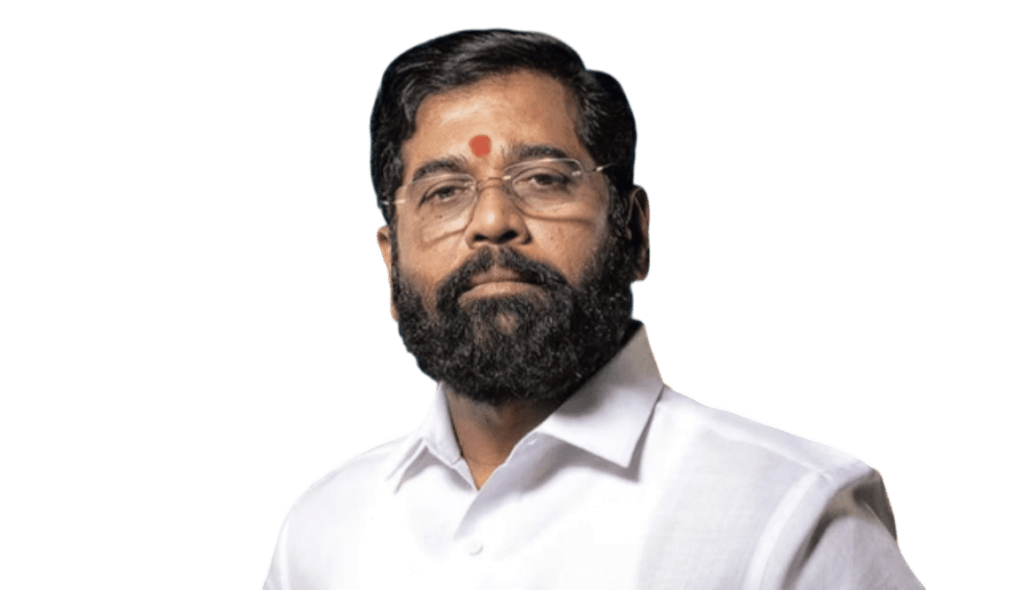
“
“His leadership with these responsibilities makes eknath shinde office a centrally impactful one across sectors affecting millions.”
Portfolios Held & Office Today
Currently, Eknath Shambhaji Shinde is Chief Minister of Maharashtra, holding multiple portfolios. Here’s what his office involves:
Notable Achievements & Public Focus
I’ve tracked several key initiatives and focus areas that define what Shinde’s government has prioritized:
- Infrastructure expansion in urban and rural areas
- Strengthening education reform and youth opportunities
- Prioritizing public works and clean transportation
- Environment conservation and disaster relief efforts
One example: he has ratified educational reforms and backed scholarship programs, aligning with education of eknath shinde and what people expect from leaders of his stature.
Visuals & Media Presence
Many search for eknath shinde hd photo, eknath shinde full photo, or eknath shinde biodata images. In this archive, you’ll find:
- High-resolution photos from official ceremonies
- Official letter head images reflecting eknath shinde logo styles
- Photos that reflect his family history and public events
These visuals help connect the text to the real person behind the public figure.
Some Lesser-Known Facts
- He experienced electoral wins in Kopri-Panchpakhadi constituency for four terms.
- He served briefly as Leader of the Opposition between 12 November 2014 and 5 December 2014.
- His portfolio history includes PWD, Urban Development, IT, and several ministries impacting social justice and environment.
These points answer questions around eknath shinde previous offices and eknath shinde background that people often search for.
Why This Archive Exists — My Promise
I created this space because too many sources online are incomplete or biased. My goal is to bring everything—biography, education, family, political career—in one place that’s:
- Verified
- Accessible
- Free from partisan bias
As Rohan Dipak Patil, I commit to keeping updates accurate, timelines clear, and visuals genuine. I believe a leader is defined not just by titles, but by transparency and accountability.
What I Want You to Do
- Explore the timelines and facts
- Compare his education, office history, and family details
- Use the archive to understand what influences eknath shinde today schedule, eknath shinde native place, and how his upbringing shaped his policies
- Share feedback or suggest missing content
Because your trust helps this archive grow stronger.
Daily work style, today’s schedule, and how to track visits
People often search for “eknath shinde today schedule” or “eknath shinde today visit” expecting a live feed. A chief minister’s calendar changes by the hour due to cabinet briefs, district reviews, and disaster-management calls. The practical way to follow his day is to watch official press notes, district collector updates, and the state information department’s bulletins. As the editor of this archive, I summarize major appearances and speeches once they’re confirmed, not rumored. That keeps the record clean and useful.
My note as Rohan: when I publish a day’s wrap-up, I list the venue, purpose, key decisions, and any follow-up actions promised to citizens. Short, verifiable, and easy to scan.
Education of Eknath Shinde and why it matters for policy
Many readers ask about “education of eknath shinde” or “eknath shinde education qualification.” His formal path includes Mangala High School in Thane through Class 11 and, later in life, a Bachelor of Arts from Yashwantrao Chavan Maharashtra Open University with a high score. That late academic milestone is more than a line on a CV. It signals respect for continuous learning, something I see reflected in pushes for scholarship coverage, skill programs, and modernized curricula across semi-urban colleges. When leaders continue their education, they tend to focus on outcomes, not optics. That theme shows up across this archive.
Biography highlights in context (family, background, native place)
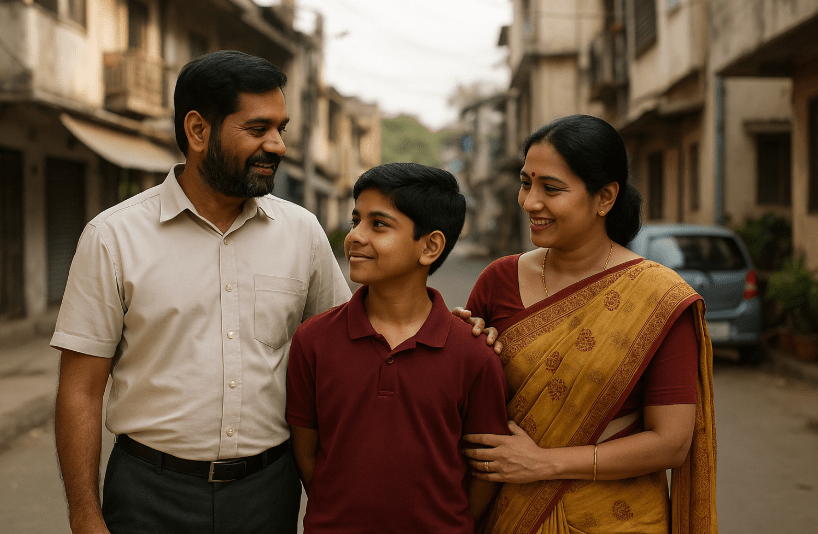
Search terms like “eknath shinde family,” “eknath shinde family history,” and “eknath shinde native place” point to the same roots: born in Satara district on 9 February 1964, raised later in Thane, and grounded in the working-class rhythms of that city. The family’s move to Thane placed him at the heart of local civic life, where neighborhood needs often arrive before state budgets do. This is also where mentorships formed and where early leadership posts were earned.
As a citizen-editor, I avoid sensational angles about private life. I record only what is already public and relevant to governance: spouse, children in public roles, and family events that shaped his worldview.
Dharamveer Anand Dighe and the Thane school of politics
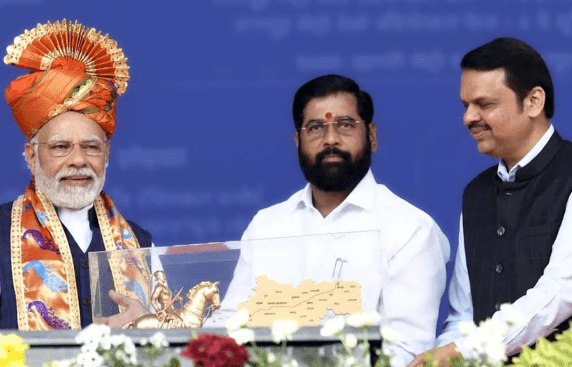
Queries like “who is anand dighe,” “who was anand dighe,” or “anand dighe accident date” come up daily. Anand Dighe’s role in Thane’s political culture was decisive: discipline, service to local units, and loyalty to Balasaheb Thackeray’s ideals. Shinde’s rise as Shakha Pramukh in 1984 fits that template. The Thane school is hands-on: resolve ward complaints, organize civic drives, and stand by workers during crises. That is why Shinde’s supporters still place Dighe’s portrait next to Balasaheb’s at events; it is a lineage marker, not just nostalgia.
Portfolio scope and what it means for citizens
“Eknath shinde office” and “eknath shinde political career” aren’t abstract tags; they translate into decisions that touch roads, fares, classrooms, hospitals, and city planning. Below is a compact map of major portfolios and citizen-facing goals I track in this archive.
Portfolio-to-policy map (editor’s overview)
I place each decision under one of these umbrellas: General Administration, IT, Urban Development, Public Works, Transport, Social Justice and Minority Development, Relief and Rehabilitation/Disaster Management, Soil and Water Conservation, Environment and Climate Change, and Information & Public Relations. That structure makes it easier for students and journalists to compare announcements with outcomes.
Programs and outcomes you can verify
The most helpful way to explain government work is to show inputs and expected results. The table below condenses widely cited initiatives into citizen language you can check against official notices and district orders.
Programs and expected citizen outcomes
| Sector | Program / Decision | What it means for citizens |
| Agriculture | NaMo Shetkari Mahasanman Nidhi (₹6,000 per farmer annually) | Direct income support; predictable cash flow for 1.15 crore farmers |
| Agriculture | Crop insurance at ₹1; state pays bulk premium | Lower risk for smallholders during erratic seasons |
| Water & Rural | Jalyukta Shivar Phase-2 in 5,000 villages | Local water security; better kharif planning |
| Irrigation | 29 water projects with revised approvals | Irrigation to about 6.5 lakh hectares; yield stability |
| Power for farms | Mukhyamantri Saur Krushi Vahini 2.0 | Daytime power to pumps; safer operations |
| Urban Infra | Samruddhi Mahamarg operational sections | Faster movement of goods and people |
| Transport Links | Mumbai Trans-Harbor Link (Atal Setu) near completion | Shorter commutes; new logistics corridors |
| Women & Children | Lek Ladki benefits for eligible families | Financial cushion until age 18 for the girl child |
| Mobility | 50% ST fare discount for women | Cheaper intercity travel; access to jobs and education |
| Jobs | Accelerated recruitment for 75,000 posts | Faster filling of vacancies; reduced backlog |
| Entrepreneurship | CM’s Employment Generation loans (12k+ cases) | Seed capital pipeline; jobs for over 1 lakh youth |
| Health | Merged health cover schemes; cards up to ₹5 lakh | Simplified access; fewer paperwork loops |
| Clinics | Aapla Dawakhana network rollout | Nearby primary care, especially in dense wards |
| Education | PM SHRI model schools, bigger scholarships | Better quality, equity, and outcomes in classrooms |
| Housing | Modi Awas Gharkul (10 lakh houses in 3 years) | Formal housing push for OBC beneficiaries |
| Fuel | Lowered petrol/diesel tax | Relief on transport and logistics costs |
| Seniors | Free ST travel at 75+ | Dignity and access for elderly |
| Inclusive access | Shasan Aplya Daari outreach | One-window benefits in local camps |
My method is simple: I log the announcement, add implementation notes, and when possible attach a district-level status line, like “tenders floated” or “work order issued.” That turns headlines into trackable entries.
Visual identity, photos, and letter head requests
Searches such as “eknath shinde hd photo,” “photography eknath shinde hd,” “eknath shinde full photo,” and “eknath shinde letter head” often mean users want clean assets for reports or student projects. This archive hosts descriptive indexes and guidance on lawful reuse. If an image is marked for public use, I say so; if it requires permission, I flag that too. Responsible use keeps creators credited and the ecosystem healthy.
A quick note on logos: “eknath shinde logo” can mean campaign icons or government crests. Campaign graphics usually have party rights; state emblems have separate rules. When in doubt, I recommend using neutral portraits or press-pool images with proper captions.
Frequently asked specifics (biodata, height, family names)
People search for “eknath shinde bio,” “eknath shinde biodata,” “eknath shinde height,” “eknath shinde father name,” “eknath shinde mother name,” and “does eknath shinde have kids?” This archive prioritizes facts relevant to public life. Family details already in the public domain and central to the biography are included; speculative or intrusive data is not. That editorial line protects privacy while keeping the record complete where it truly matters.
If you’re a student preparing a Marathi-medium essay and searched for “eknath shinde information in marathi,” “eknath shinde history in marathi,” or “eknath shinde wikipedia in marathi,” you’ll find concise Marathi notes inside dedicated sections. I also add short Hindi snippets where they add context: “Loknath ka arth hai jan-samarthan aur zameeni sampark.”
Minister contact number and how to communicate responsibly
A recurring query is “eknath shinde minister contact number” or “eknath shinde pa name.” For security and protocol reasons, direct lines are not listed here. Instead, I provide official channels that route requests correctly: public grievance cells, district portals, and the state information department forms. These routes log your issue, assign it, and allow follow-up—much more reliable than an unverified phone number.
As an editor, I also log common citizen issues (rural roads pending, scholarship delays, fare disputes) and map them to the right department so readers know where to write. That turns a search into action.
Why the Thane years still define the leadership style
Beyond titles and years served, the years in Thane explain the leadership tone: solve ward problems first, avoid long delays, stay visible in crises, and credit the team. When I compare early corporator duties in 1997 and 2002 with later roles in Public Works and Urban Development, the through-line is the same: execution over rhetoric. That is a useful lens for students evaluating administrative models.
For students and researchers: how to use this archive
If your query was “eknath shinde wiki” or “biography of eknath shinde,” treat this site as a cross-checked dossier with timelines, documents, and quotes. For Marathi assignments—“eknath shinde biography in marathi,” “eknath shinde family history in marathi”—use the bilingual briefs. If you’re studying political mentorship, the “Dharamveer Anand Dighe” section connects doctrine with local organization. If you’re tracking disaster-management casework, the portfolio map and program table give you a starting dataset.
My tip: pick one portfolio (say, Transport) and follow an initiative from announcement to tender to commissioning. That’s how policy becomes a field note.