As Rohan Dipak Patil, tech graduate and public data analyst, I find the journey of धनंजय यशवंत चंद्रचूड़ (Dhananjay Yeshwant Chandrachud) nothing short of inspiring. From his early education in Delhi to becoming the 50th Chief Justice of India, his career reflects integrity, reform, and fearless interpretation of constitutional law. This article offers a detailed look at his background, judicial philosophy, and landmark verdicts that continue to shape Indian democracy — perfect for those searching for “cji chandrachud biography” or “dy chandrachud family history.”
Early Life and Family Heritage
Born on 11 November 1959, D.Y. Chandrachud hails from a family deeply rooted in law and culture. His father, Yeshwant Vishnu Chandrachud, was India’s longest-serving Chief Justice, while his mother, Prabha Chandrachud, was a noted classical singer for All India Radio. Growing up in Delhi, young Chandrachud balanced academics and cultural exposure — a blend that later shaped his empathetic yet rigorous approach to justice.
Academic Excellence
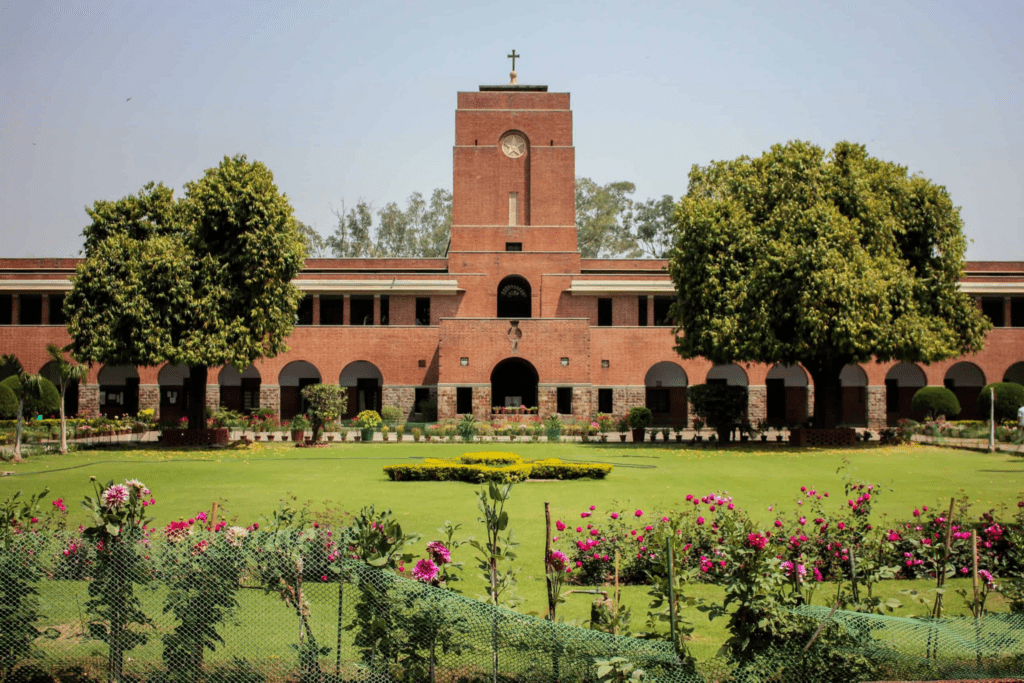
Education was a cornerstone of his early life. After completing schooling at St. Columba’s, he earned a BA in Economics and Mathematics from St. Stephen’s College, Delhi (1979), followed by an LLB from Delhi University (1982). His brilliance earned him the prestigious Inlaks Scholarship to Harvard, where he completed his LLM in 1983 and later a Doctorate in Juridical Sciences (SJD) in 1986.
| Education Timeline | Institution | Notable Achievement |
| BA (Economics & Math) | St. Stephen’s College, Delhi | Graduated with Honours |
| LLB | Faculty of Law, DU | Solid foundation in constitutional law |
| LLM | Harvard Law School | Joseph H. Beale Prize for Conflict of Laws |
| SJD | Harvard University | Completed under international faculty |
Career as an Advocate
After returning to India, he enrolled with the Bar Council of Maharashtra and began practicing at the Bombay High Court. His advocacy often focused on social justice — in 1997, he represented an HIV-positive worker who was denied employment, winning a landmark judgment upholding the Right to Livelihood. These formative cases deepened his commitment to human rights and equality.
Teaching and Academic Contributions
Between 1988–1997, Chandrachud served as Visiting Professor of Comparative Constitutional Law at the University of Bombay. Even as a practicing lawyer, he contributed to legal education, ensuring that the next generation of lawyers appreciated the balance between constitutional theory and real-world justice.
Rise to Senior Advocate and Solicitor General
In 1998, at just 38 years old, he was designated Senior Advocate, a rare honour for someone so young. Shortly after, he became the Additional Solicitor General of India, representing the Union in significant cases before his elevation as a Permanent Judge of the Bombay High Court (2000).
Judicial Career: From High Courts to Supreme Court
Chandrachud’s judicial career spans more than two decades:
- Bombay High Court Judge: March 2000 – October 2013
- Chief Justice of Allahabad High Court: Oct 2013 – May 2016
- Supreme Court Judge: May 2016 – Nov 2022
- 50th Chief Justice of India: Nov 2022 – Nov 2024
During his tenure, he emphasized a humanistic interpretation of law, balancing constitutional text with societal realities.
Landmark Judgments
Justice Chandrachud is known for progressive, rights-based verdicts:
- Right to Privacy (Puttaswamy case, 2017): Authored the majority judgment affirming privacy as a fundamental right.
- Navtej Singh Johar (2018): Decriminalized homosexuality, calling Section 377 IPC “anachronistic.”
- Joseph Shine (2018): Struck down adultery law, citing equality and dignity of women.
- Sabarimala Case (2019): Held that exclusion of women violated constitutional morality and Article 17.
- Delhi Govt vs LG (2018): Asserted that real executive power must lie with elected representatives.
Philosophy and Approach
CJI Chandrachud often speaks about a “transformative Constitution”, which evolves with society. His judgments frequently incorporate global legal perspectives, feminist thought, and protection of individual liberty.
Numbers That Speak
Over his Supreme Court tenure, he authored 612 judgments and sat on more than 1274 benches, leading in productivity among SC judges. His work spans constitutional, service, and criminal matters — with nearly 16% of his cases in service law and 10% in constitutional law.
Personal Touch: Rohan’s Reflection
As a tech graduate, I admire how Chandrachud balances tradition with modernity — much like writing clean code with backward compatibility. His judgments are precise yet empathetic, proving that jurisprudence can be progressive without abandoning constitutional discipline.
Legacy and Continuing Relevance
Even after retiring on 10 November 2024, his influence on Indian jurisprudence remains profound. His approach to privacy, equality, and individual rights continues to guide lower courts and inspire legal scholarship.
Dissents that Redefined Indian Constitutional Law
One of Justice Chandrachud’s greatest strengths is his willingness to dissent when he believes the Constitution demands it. His dissents have often become guiding lights for future reforms.
Aadhaar Money Bill Dissent
In Justice K.S. Puttaswamy v Union of India (2018), he was the sole dissenter in the Aadhaar case, holding that passing the Aadhaar Act as a Money Bill was unconstitutional. He argued that this bypassed the Rajya Sabha, weakening parliamentary federalism. His dissent noted that “the Constitution does not endorse a carte blanche for the state to intrude into citizens’ personal data without adequate safeguards.”
Today, his words are frequently cited in discussions on data protection and digital rights, especially after the introduction of India’s Digital Personal Data Protection Act.
Bhima Koregaon Arrests
In Romila Thapar v Union of India (2018), involving the arrest of five activists, Justice Chandrachud dissented and recommended an independent Special Investigation Team. He wrote that liberty cannot be sacrificed at the altar of political expediency and that a fair probe is essential when fundamental rights under Articles 19 and 21 are at stake.
This dissent is often compared to classic human rights jurisprudence globally and remains a rallying point for civil liberties advocates.
Technology, Privacy and Digital Rights
Justice Chandrachud’s jurisprudence has been crucial for shaping India’s digital legal framework:
- Right to Privacy: Recognized as intrinsic to life and liberty under Article 21.
- Information Autonomy: He stressed that individuals must have control over their data — a principle now central to India’s data protection laws.
- Freedom of Expression: In several cases, he upheld that online speech deserves the same constitutional protection as offline speech.
As I often tell my peers, his judgments are like robust open-source code — transparent, reusable, and designed for the long-term health of the system.
Social Justice and Gender Sensitivity
Justice Chandrachud’s approach is known for its feminist perspective, shaped by his early years on the Bombay High Court bench. In Lt. Col. Nitisha (2021), he ruled in favour of granting Permanent Commission to women officers in the Army, condemning systemic discrimination.
He frequently uses language that centres dignity, equality, and intersectionality — making his judgments accessible not just to lawyers but also to common citizens.
Global Influence
His work has been cited in international legal forums. Law schools in the US, UK, and Singapore now include his privacy and equality judgments in their comparative constitutional law curricula, highlighting India’s leadership in rights-based jurisprudence.
Legacy in Numbers and Impact
| Area | Impact |
| Privacy & Digital Rights | Established Right to Privacy as a fundamental right |
| Equality & Gender Justice | Led rulings on women’s entry into Sabarimala, army commissions |
| Democracy & Federalism | Clarified limits of LG’s power in Delhi, strengthened elected governments |
| Free Speech & Liberty | Dissent in Bhima Koregaon case safeguarding Article 19 & 21 rights |
The Judge of the Digital Age
For me, as a researcher and commentator, D.Y. Chandrachud embodies the modern Indian judge — constitutional, compassionate, and forward-looking. His dissents will continue to shape policy debates long after his retirement.
If you are a law student, policymaker, or just a citizen who cares about justice, revisiting his opinions is like reading a roadmap for a more inclusive democracy.
Call to Action: Explore his judgments, discuss them in civic forums, and use them to demand accountable governance. As we say in Hindi, “Nyay sabka, zimmedari sabki” — justice is everyone’s responsibility.